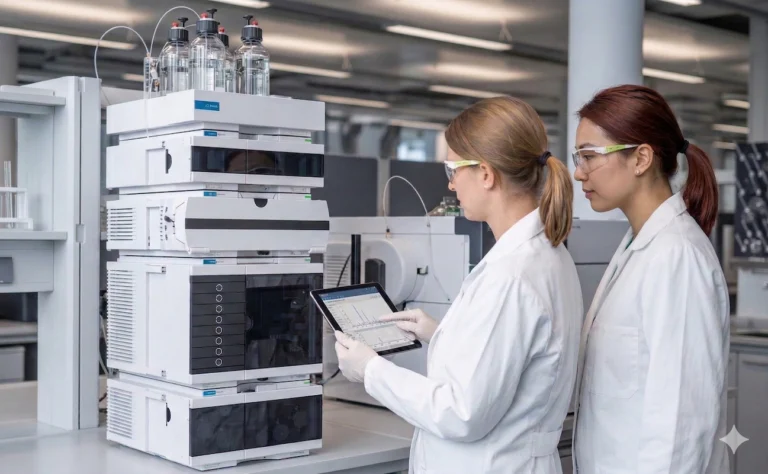

multivendor service agreement

Beyond the Brand: Why a Multivendor Service Agreement Beats OEM Contracts for Many Labs

By Daniel Brown, Vice President of Sales

Most lab managers treat service contracts as a necessary evil—costly, rigid, and branded by default. Original Equipment Manufacturer (OEM) service plans are the go-to for high-value systems like Agilent GC/MS, LC/MS, and ICP-MS units.

But when your lab runs instruments from multiple brands, OEM coverage becomes a patchwork of overlapping contracts, inconsistent support, and unnecessary spend. That’s where a multivendor service agreement changes the game.

Instead of juggling multiple OEMs with siloed support, labs can consolidate maintenance and repairs under one flexible plan—saving time, money, and stress.

This article breaks down how multivendor service agreements work, how they compare to OEM plans, and how they help labs maintain uptime across mixed-brand instrument portfolios.


The Reality of OEM Service Contracts

Let’s be clear—OEM support has its place. For newer, proprietary instruments or highly specialized systems, sticking with the manufacturer makes sense. But for most labs, OEM service contracts are designed to serve the brand’s business model—not yours.

Common challenges with OEM support include:

  • Single-brand limitations: OEMs only service their own equipment. If your lab runs an Agilent GC/MS, a Shimadzu LC/MS, and a Frontier pyrolyzer, you’ll need multiple contracts. This creates blind spots and service gaps.
  • High upfront costs: OEMs typically require annual contracts paid in full, which can tie up capital and limit flexibility—especially if your needs change mid-year.
  • Delayed response times: In remote or underserved regions, OEM field engineers may take days to respond, putting your lab’s productivity at risk.
  • Inflexible coverage: Many standard contracts don’t include parts, software support, or backup systems. Any upgrades or additional services usually come with new fees.


When uptime is critical and budgets are tight, these drawbacks can add operational friction your lab doesn’t need.


What Is a Multivendor Service Agreement?

A multivendor service agreement is a single maintenance and repair plan that covers instruments from multiple manufacturers—under one unified contract. This approach is especially valuable for labs running a mix of new, used, or refurbished systems across brands.

Unlike OEM contracts that focus on one brand, multivendor agreements are built around how your lab actually operates.

Typically, a multivendor service plan includes:

  • Preventive maintenance and calibration for systems like GC, LC, and MS
  • Break/fix repairs with certified parts
  • Remote troubleshooting and diagnostics
  • On-site field service when needed
  • Flexible billing options—including monthly payment terms
  • Consolidated support across brands and instrument types


For example, Quantum Analytics’ service engineers are trained to support Agilent, Markes, Frontier Labs, PerkinElmer, and Shimadzu systems—all under a single service umbrella. This helps labs simplify support, reduce downtime, and avoid juggling multiple vendors.


Why a Multivendor Service Agreement Makes Sense for Modern Labs

Today’s labs are more complex than ever. Whether driven by budget constraints, refurbished equipment purchases, or legacy systems from past vendors, many labs now operate with a diverse mix of instrumentation. In this landscape, the traditional OEM model falls short.

That’s where a multivendor service agreement excels—offering practical, lab-focused benefits that OEMs simply can’t match.

1. One Contract. Full Coverage.
Managing three or four OEM contracts wastes time and increases risk. A multivendor agreement brings all your systems under one plan, streamlining scheduling and eliminating coverage gaps—especially across integrated workflows involving Agilent GC/MS, Shimadzu LC, or ICP-MS platforms.

2. Faster, Brand-Agnostic Response
With the right provider, response times often beat OEMs—especially in underserved regions. Quantum Analytics, for example, offers 48-hour on-site dispatch and same-day remote support for many issues, regardless of instrument brand.

3. Flexible Payment Options
Instead of large lump-sum contracts, labs can opt for monthly billing that aligns with cash flow. This is a game-changer for startups, academic labs, and facilities working within grant cycles.

4. Better Support for Older or Refurbished Systems
OEMs often phase out support for legacy models or refuse service for refurbished equipment. Multivendor service keeps these systems running through proactive maintenance, part sourcing, and upgrade planning—extending their usable life and ROI.


Understanding the Scope: What’s Actually Covered?

Not all service agreements are created equal. That’s why it’s essential to review the scope of a multivendor service agreement before signing.

At a minimum, most comprehensive plans should include:

  • Scheduled Preventive Maintenance
    Routine system checks, cleanings, and calibrations for instruments like GC/MS, LC/MS/MS, and HPLC to ensure long-term performance.
  • Emergency Repair Services
    Fast, responsive support when unexpected breakdowns occur—helping you avoid extended downtime.
  • Parts and Labor
    Depending on your plan, parts may be bundled or billed separately. Ask for clarification upfront to avoid surprise costs.
  • Compliance Documentation
    Service logs, maintenance reports, and validation documentation to support audits, SOPs, or regulatory reviews.
  • Remote and Onsite Support
    Some issues can be resolved remotely, while others require a field technician. A multivendor provider should offer both.


Additionally, labs should ask whether the service provider includes things like:

  • Software or method troubleshooting
  • Loaner systems for high-value instruments
  • Custom service windows or flexible scheduling


When these elements are bundled together, multivendor support becomes more than just a cost-saving measure—it becomes a strategic part of your lab’s operational resilience.


Comparing Service Models: A Quick Framework

To help lab managers evaluate options more clearly, here’s a side-by-side comparison of traditional OEM service contracts versus a multivendor service agreement—like the ones offered by Quantum Analytics.

Feature OEM Service Multivendor Service from Quantum Analytics
Single-brand support Yes No – supports multiple OEMs
Annual contract, prepaid Usually required Optional – monthly payment available
Covers refurbished systems Often not supported Yes
Downtime response Variable by location Targeted 24–48 hour response
Loaner units or rentals Rarely available Available on request
Parts markup Typically high Often lower or bundled
Flexibility to scale up/down Limited High

Note: Table reflects general industry trends. Specific terms may vary by vendor and contract type.

As this comparison shows, multivendor service is purpose-built for labs with diverse instrumentation needs, particularly those managing Agilent GC/MS, HPLC, or refurbished LC/MS/MS systems across multiple platforms.


Real-World Use Cases: Where Multivendor Service Shines

Multivendor service agreements aren’t just a theoretical solution—they’re already delivering results for labs of all sizes, across many industries.

Here are a few scenarios where this model makes a measurable difference:

Contract Testing Labs

Labs operating under tight turnaround times and regulatory deadlines can’t afford to wait days for service—especially when multiple instruments are involved. A multivendor agreement ensures fast, coordinated support across your entire fleet, whether it includes Agilent GC/MS, Thermo ICP-MS, or Shimadzu HPLC.

Startups and Growth-Stage Labs

New labs often build their instrument suites piece by piece—purchasing refurbished equipment from various brands. Instead of chasing multiple OEMs, they benefit from a single, scalable plan that covers everything under one roof. This reduces complexity while ensuring uptime from day one.

Public Sector and Academic Labs

Universities and government labs often maintain legacy equipment and work within rigid budgets. Multivendor support allows them to keep older instruments running efficiently—without violating procurement rules or needing to allocate capital for full replacement.


Service Shouldn’t Stop at Brand Borders

For years, labs defaulted to OEM service contracts—often out of habit, not strategy. But as instrumentation portfolios grow more diverse and budget pressure intensifies, that old approach no longer fits.

Today’s labs need service that adapts to their environment—not the other way around.

That’s where multivendor service agreements come in. They offer:


At Quantum Analytics, we believe lab service should match the complexity, pace, and mission of your work. Whether you’re managing a fast-paced testing lab, a grant-funded academic team, or a startup building infrastructure from scratch, we’re here to keep your instruments running—and your lab productive.

Let’s build a service plan that works the way your lab actually operates.
Share this article on:
LinkedIn
Facebook
Email

Additional Articles

Article

CapEx vs. OpEx for lab equipment
Compare CapEx vs. OpEx for lab equipment. Learn how each impacts cash flow, taxes, and flexibility so your next procurement decision drives ROI.

Article

Lab equipment procurement
Avoid rush buys and overspending. Learn how lab procurement teams can proactively plan instrumentation needs with smarter sourcing strategies.

Article

lab equipment financing for startups - top tips and guide
Early-stage labs don’t need six-figure checks to get started—they just need flexible, science-focused financing. That’s where lab equipment financing for startups comes in.
Quantum Analytics Logo

REGISTER FOR LIVE WEBINAR

Beyond the Brand: Why a Multivendor Service Agreement Beats OEM Contracts for Many Labs

Complete this form below to sign up and we will reach out to you with instructions